Dear Moderator,
Thanks for taking the time to look around my blog. My group blog is linked to this page aswell as links to both of my teachers blogs. Both are found on the left hand side, from which you can find links to the other members of my group's blogs.
On this blog you will find my individual research into film opening sequences and the film industry and also a few of my planning and production work over the course of the project.
As you have probably noticed my film opening sequence and preliminary task sequence have been posted at the top of the blog.
Use the labels, also on the left, to navigate my work. Enjoy at your leisure..
Thanks, Lewis.
Tuesday, 5 April 2011

Monday, 4 April 2011
Question 1
1. In what ways does your media product use, develop or challenge forms and conventions of real media products.
Our film 'The Witness' is and Action/Thriller that follows the story of a teenage boy named Jack. Feeling isolated by everyone else in the world Jack turns to drugs and soon finds himself in the wrong place at the wrong time. He witnesses two murdering gang members attempting to burry their victim, he attempts to flee, but not before being spotted by them. After a chase through the forest Jack is caught and taken capture by the bloodthirsty killers.
After escaping the gang use evidence of Jacks drug use as leverage to keep him quiet, threatening to turn him in to the police. In order to stay alive, he must take matters into his own hands and uncover the truth behind the gang's murders and protect both himself and their next victim from harm.
Genre:
'The Witness' is a British Action Thriller. The primary signifier of its genre comes from the gritty themes of Gang violence, kidnapp and murder. The film contains many moments that create both adrenaline and fear with multiple point of view shots to immerse the audience and allow them to empathise with Jack. Our project shares similar themes to Pierre Morel's Action Drama Taken, a film where an ex-spy must save his daughter from an estranged captor.
These similarities are:
Within this trailer we can clearly see the similarities between story lines of the two films and how in both the primary victims are women with a male protagonist attempting to save them.
Narrative Structure:
When deciding the narrative structure for our film we took into account Todorov's theory of equilibrium:

As this theory works particularly well with Horror and Thriller films we decided to apply it to our storyline. Following this idea you can see use of the theory within our opening sequence.
Our film 'The Witness' is and Action/Thriller that follows the story of a teenage boy named Jack. Feeling isolated by everyone else in the world Jack turns to drugs and soon finds himself in the wrong place at the wrong time. He witnesses two murdering gang members attempting to burry their victim, he attempts to flee, but not before being spotted by them. After a chase through the forest Jack is caught and taken capture by the bloodthirsty killers.
After escaping the gang use evidence of Jacks drug use as leverage to keep him quiet, threatening to turn him in to the police. In order to stay alive, he must take matters into his own hands and uncover the truth behind the gang's murders and protect both himself and their next victim from harm.
Genre:
'The Witness' is a British Action Thriller. The primary signifier of its genre comes from the gritty themes of Gang violence, kidnapp and murder. The film contains many moments that create both adrenaline and fear with multiple point of view shots to immerse the audience and allow them to empathise with Jack. Our project shares similar themes to Pierre Morel's Action Drama Taken, a film where an ex-spy must save his daughter from an estranged captor.
These similarities are:
- Themes of Kidnapp.
- A protagonist having to take matters into his own hands to bring the antagonists to justice.
- Similar plot line (an alone protagonist having to track and fight his enemies to survive)
- A protagonist having to take matters into his own hands to bring the antagonists to justice.
- Similar plot line (an alone protagonist having to track and fight his enemies to survive)
Within this trailer we can clearly see the similarities between story lines of the two films and how in both the primary victims are women with a male protagonist attempting to save them.
Narrative Structure:
When deciding the narrative structure for our film we took into account Todorov's theory of equilibrium:
As this theory works particularly well with Horror and Thriller films we decided to apply it to our storyline. Following this idea you can see use of the theory within our opening sequence.
 |
| Equilibrium |
 |
| Disruption |
As our project is only an opening sequence we do not yet have a 'Journey' or a 'Resolution' featured however these two would be Jacks mission to stay alive and the final resolution being Jack defeating or exposing the gang, winning the girl (their next victim) and walking off scott free. Very similar to the film 'The Sentinal' where the main character is on the run whilst trying to figure out the truth about the things happening around him, the character is also being blackmailed from doing the right thing and cannot turn to the police for help.
Our films form is similar to that of most others as the story is often set up within the first few minutes and the Heros Journey makes up the rest of the film with the resolution ofcourse coming in at the final minutes of the film.
Purposes of opening sequences:
Opening sequences aim to achieve three key things that will encourage someone to watch the rest of the film, these include the introduction of characters, the establishing of the films themes and genre and to engage the veiwer so much that they continue to watch the film.
I believe we achieved all three of these as we introduce the character of Jack and the two unknown villians, we set the tone with the image of a dead body and a chase sequence and we also engage the audience through fast paced shots and handheld POV shots.
Our films form is similar to that of most others as the story is often set up within the first few minutes and the Heros Journey makes up the rest of the film with the resolution ofcourse coming in at the final minutes of the film.
Purposes of opening sequences:
Opening sequences aim to achieve three key things that will encourage someone to watch the rest of the film, these include the introduction of characters, the establishing of the films themes and genre and to engage the veiwer so much that they continue to watch the film.
I believe we achieved all three of these as we introduce the character of Jack and the two unknown villians, we set the tone with the image of a dead body and a chase sequence and we also engage the audience through fast paced shots and handheld POV shots.
Saturday, 2 April 2011
Question 2
2. How does your media product represent particular social groups
The main characters within our product have quite obscure backgrounds and portray an acute social group. However as a whole modern, British, teen culture does play a role within our film we could argue that we are representing a portion of teenagers. This social group is represented in a gritty, realistic fashion without glamouring up the lifestyle. This is similar to the social group shown in the films Adulthood and Kidulthood.

The main characters within our product have quite obscure backgrounds and portray an acute social group. However as a whole modern, British, teen culture does play a role within our film we could argue that we are representing a portion of teenagers. This social group is represented in a gritty, realistic fashion without glamouring up the lifestyle. This is similar to the social group shown in the films Adulthood and Kidulthood.
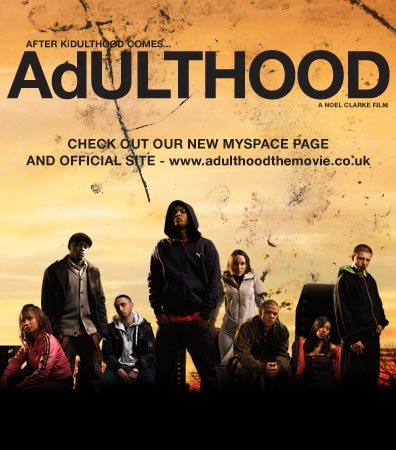
We represent this social group through costume and props, for example we have a spliff being smoked which immediately and quite obviously shows that our characters are drug users, this is shown in a lesser extent in the main characters clothing which is branded Adidas jogging bottoms and a jacket, this suggests he is working class and not particularly well off.
In certain aspects I believe our casting was not particularly representative of the social group we were aiming to present. In my opinion our actors didn't look the part for who we were trying to represent and looked to staged and unnatural.
Question 3
3. What kind of media institution might distribute your media product and why?
Our film company, Bite the Bullet, focuses primarily on the production of British themed films with emphasis on youth and gang culture. Our films are most likely to be of the action/thriller genre as the name suggests.

A possible distributor, on which our group agreed, was Revolver Entertainment. This was chosen as the company has both a UK and a USA base for which to distribute and market our film from giving us a international reach, however we are unsure of the reception our film may get in the US for the reasons that we believe the theme and story may not be believable, applicable or realistic over there.


They are also a leading, high-tech distribution company that utilise multi-media technology in terms of distribution and marketing, this is great for our audience who are youthful and tech-savvy.
Question 4
4. Who would be the audience for your media product?
Our pitch was originally aimed at young men between 16-25 who are fans of action/thriller genres. This is because the film features violence and drug use and would probably be certificated as a 15.
I would expect our film to have a national appeal and a minor international appeal this is because our target audience is somewhat niche, to the extent that the film is intended for a British audience, and the genre is fairly open to everyone. We expect our audience to be similar to that of the main character, young, thrill seekers who can relate to our protagonist.
Example Audience Profile:

This is Mark, He is a 19 year old student who lives in London. He goes to Kings College London and enjoys going out to clubs and bars etc.
He utilizes a range of different media platforms and owns an iPhone. He regularly uses the internet and his most visited sites are FaceBook and YouTube.
We chose this audience within production as we thought it would be an exciting audience to create a film for, despite being very conventional.
Our pitch was originally aimed at young men between 16-25 who are fans of action/thriller genres. This is because the film features violence and drug use and would probably be certificated as a 15.
I would expect our film to have a national appeal and a minor international appeal this is because our target audience is somewhat niche, to the extent that the film is intended for a British audience, and the genre is fairly open to everyone. We expect our audience to be similar to that of the main character, young, thrill seekers who can relate to our protagonist.
Example Audience Profile:
This is Mark, He is a 19 year old student who lives in London. He goes to Kings College London and enjoys going out to clubs and bars etc.
He utilizes a range of different media platforms and owns an iPhone. He regularly uses the internet and his most visited sites are FaceBook and YouTube.
We chose this audience within production as we thought it would be an exciting audience to create a film for, despite being very conventional.
Friday, 1 April 2011
Question 5
How did you attract/address your audience?
We tried to make the film appeal to our audience in a number of ways. For starters we made sure that even our main characters costume would feature things that we believed our audience would be able to identify with. For example here is a sketch of our protagonist, Jacks, outfit.
Jack's clothing is very casual, immediately making him a normal, approachable person, and features a number of brands such as 'Nike' and 'Adidas' that our audience would recognise making the character more believable and realistic.

Similar to his clothing Jack speaks casually using slang and abbreviations common in youth culture in London. Jack is an 'antihero' and more appealing for it. It is proven that our audience, more often than not, are more likely to admire characters such as Jack; with fatal flaws or dark backstories. Considering the theory of uses and gratifications we decided to focus on the idea of adrenaline and fears. e.g. Fear of gangs, abduction, police etc.
Jack is of a similar social background to our audience, the difference being, he is considered a loner and neglected. Despite this throughout the film we see him change and become more heroic and confident allowing the audience to aspire to be like him. The fast paced chase scene within the opening sequence is intended to thrill the audience and 'gratify their needs'.
We wanted the realism of our film to aid the audience in the 'suspension of their disbelief' and help them enter the world of our film. We went about this by setting the film primarily in an urban environment within London, despite the opening sequence location being within the suburbs.
The Witness Audience Feedback Questionnaire:
After seeing our audience feedback it was reassuring to see that our film had successfully appealed to young men between the ages of 14-18 this was a fraction lower then the age we had originally intended to market the film towards, however, it is still above the age limit to what we had based the film, 15. Along with this we also noticed that some females had also enjoyed the film rating it with an average of 7/10 where as the males within the audience averaged it out at at 8.5/10.
Similar to his clothing Jack speaks casually using slang and abbreviations common in youth culture in London. Jack is an 'antihero' and more appealing for it. It is proven that our audience, more often than not, are more likely to admire characters such as Jack; with fatal flaws or dark backstories. Considering the theory of uses and gratifications we decided to focus on the idea of adrenaline and fears. e.g. Fear of gangs, abduction, police etc.
Jack is of a similar social background to our audience, the difference being, he is considered a loner and neglected. Despite this throughout the film we see him change and become more heroic and confident allowing the audience to aspire to be like him. The fast paced chase scene within the opening sequence is intended to thrill the audience and 'gratify their needs'.
We wanted the realism of our film to aid the audience in the 'suspension of their disbelief' and help them enter the world of our film. We went about this by setting the film primarily in an urban environment within London, despite the opening sequence location being within the suburbs.
The Witness Audience Feedback Questionnaire:
After seeing our audience feedback it was reassuring to see that our film had successfully appealed to young men between the ages of 14-18 this was a fraction lower then the age we had originally intended to market the film towards, however, it is still above the age limit to what we had based the film, 15. Along with this we also noticed that some females had also enjoyed the film rating it with an average of 7/10 where as the males within the audience averaged it out at at 8.5/10.
Tuesday, 1 March 2011
Question 6
6. What have you learnt about technologies from the process of constructing this product?


Throughout the project I have improved my skills in both editing and filming. With the camera I have learnt the importance of manual settings and how to utilise them and from within what circumstances to use them and I have become more decisive in terms of editing and decision making. This interest in manual settings upon the camera came about when after a shoot we realised that half way through the shoot a number of shots had had their colour grading edited giving them a washed out effect meaning that we could not use them in our final sequence.
I have become a lot more confident with the different software used in creating films on the computer. For example, I now know my way around Adobe Premiere Pro and know various shortcuts and tools to help make editing a lot easier. We extended our knowledge of the software by using different video effects and transitions such as editing the Brightness and Contrast of a shot to make it look entirely different. This can be seen on all of our shots within the forest as we wanted to create a gloomy, eerie atmosphere to set the mood for the rest of our film. Along with Adobe softwares we also used Live Type on a Macintosh, this was used to create and animate the titles within our opening sequence.

I think that for our entire the group the most valuable thing we learnt was the importance of lighting. Lighting had an enormous effect on how our project played out as we originally wanted to film at night to cause the murderers hiding the body to seem more realistic and believable however it immediately became apparent that we did not have the sort of technology available to properly light our shoot. After changing the timing at which our opening sequence was set we soon learnt how to frame our shots so it appeared to be of a similar time of day to the other shots. This was very important as we wanted to remember our preliminary task and how important continuity is.
As you can tell from this shot we have various lighting issues such as camera lens glare and beams of light shining through the trees, we decided to ignore these issues as overall we agreed that the shot worked. However we still had to heavily edit the shot to reduce the glare on the camera and increase the contrast of the shot to make it more enigmatic and ominous.
Question 7
7. Looking back at your preliminary task, what do you feel you have learnt in the progression from it to the full product?
Since the preliminary I feel I have progressed an enormous amount in terms of both knowledge and practical ability. I know how to edit to a strong quality and have learnt a lot about continuity through editing and then finding out we have to have another re-shoot.
In terms of shot quality I have learnt about the importance of tight framing and creating focus on certain things to create enigma or to tell a story. The most important skill Ive learnt since the preliminary task was the importance and application of different continuity theories. These include the 180 and 30 degree rule and match-on-action shots which we enjoyed using in our editing sessions. Correct application of these rules assured that our sequence made sense and aided in immersing the audience into the film through seamless action.


As well as practical skills I also learnt alot about organisation, such as filling out shot logs to make for simplar editing sessions, which also aided our time management meaning that in the week of the deadline we were less stressed than usual as we were confident we would finish our project on time.

Working as a group was often annoying as we were all in conflict over how we wanted to shoot and edit our piece. However, as we spent alot longer together than we did in the preliminary task we began to spot trends in how eachother edited and got things done. This was beneficial as it meant our group finally began to agree on things and we could play to eachothers strengths whilst also nurturing our weaknesses.
Since the preliminary I feel I have progressed an enormous amount in terms of both knowledge and practical ability. I know how to edit to a strong quality and have learnt a lot about continuity through editing and then finding out we have to have another re-shoot.
In terms of shot quality I have learnt about the importance of tight framing and creating focus on certain things to create enigma or to tell a story. The most important skill Ive learnt since the preliminary task was the importance and application of different continuity theories. These include the 180 and 30 degree rule and match-on-action shots which we enjoyed using in our editing sessions. Correct application of these rules assured that our sequence made sense and aided in immersing the audience into the film through seamless action.
As well as practical skills I also learnt alot about organisation, such as filling out shot logs to make for simplar editing sessions, which also aided our time management meaning that in the week of the deadline we were less stressed than usual as we were confident we would finish our project on time.
Within the editing process we found, as a group, it was neccersary to have our own timeline each so that we could play about with the editing software and start to learn our way around the footage without causing any damage to the files or changing something we probably shouldnt.
Friday, 4 February 2011
Rec Shoot
Before filming, a member of our group, Sam went out to the location we intended to shoot at and took a variety of photos of the area and relayed them back to the group. All went well and we agreed on the location of the shoot to be at The Orchard in Cheyne Walk.
Cheyne Walk google maps search:

Cheyne Walk google maps search:

The Voiceover
During the final week of editing we realised a few of our shots were lacking neccesary audio to anchor our storyline. To get around this we decided to film a voice over for these tracks using Lewis and a friend as actors.
To make the voiceover realistic we decided we would have to record the audio within a similar enviroment to where the video took place so we headed to the far corner of the school field to get the same ambient wind and bird song in the background. We also filmed the shot from different distances CU, MCU and LS as these were the distances within the video were we wanted the audio to cut in. These varying distances would hopefully make the audio, when coupled with the video recording, sound realistic.
We decided to act out what we were doing when reading the script as to help get a sense of place and realism within our voices.
To make the voiceover realistic we decided we would have to record the audio within a similar enviroment to where the video took place so we headed to the far corner of the school field to get the same ambient wind and bird song in the background. We also filmed the shot from different distances CU, MCU and LS as these were the distances within the video were we wanted the audio to cut in. These varying distances would hopefully make the audio, when coupled with the video recording, sound realistic.
 |
| Lewis and Chris reading 'The Witness' voiceover script. |
We decided to act out what we were doing when reading the script as to help get a sense of place and realism within our voices.
Wednesday, 2 February 2011
The Script
Group Brief: To create a script to fit to our original storyboard
Working Script - to be used with storyboard

Storyboard shot(s) 16-18
1: Hurry the hell up!
2: Lift her legs up!
1: Screw you, I'm doing all the work.
2: Fine. Leave them then.
1: Just hurry up.
Storyboard shot(s) 19 Jack gasps, slight mutter/swears
Storyboard shot(s) 21-22
1: (Whispered) Did you hear that?
2: You're bloody paranoid!
1: (Whispered) Shut up, listen!
Storyboard shot(s) 23 Jack steps backwards, twig snaps.
Storyboard shot(s) 24 Reaction shot. Muted tracks, no sound.
Storyboard shot(s) 25-26
Everything goes silent. Jack sprints away.
Series of shouts from 1 & 2
'Music starts'
After the initial shoot we soon realised that some of our shots were different to how we had them on the storyboard and we decided to change certain aspects of the storyboard, this meant that a new script was needed and that a voice over would have to be done and layered over our footage.
The new script was not matched to the storyboard yet it was matched to time codes within our footage.
0:53 'Hurry up! It's getting light'
1:00 'Did you hear that?'
They approach littered spliff, Protagonist charges bad guys.
Impact shot (sound of someone getting hit)
1:21 'Oi! GET HIM!'
The voiceover can be veiwed after 0:50 seconds and has been edited to try and sound more realistic.
Working Script - to be used with storyboard

Storyboard shot(s) 16-18
1: Hurry the hell up!
2: Lift her legs up!
1: Screw you, I'm doing all the work.
2: Fine. Leave them then.
1: Just hurry up.
Storyboard shot(s) 19 Jack gasps, slight mutter/swears
Storyboard shot(s) 21-22
1: (Whispered) Did you hear that?
2: You're bloody paranoid!
1: (Whispered) Shut up, listen!
Storyboard shot(s) 23 Jack steps backwards, twig snaps.
Storyboard shot(s) 24 Reaction shot. Muted tracks, no sound.
Storyboard shot(s) 25-26
Everything goes silent. Jack sprints away.
Series of shouts from 1 & 2
'Music starts'
After the initial shoot we soon realised that some of our shots were different to how we had them on the storyboard and we decided to change certain aspects of the storyboard, this meant that a new script was needed and that a voice over would have to be done and layered over our footage.
The new script was not matched to the storyboard yet it was matched to time codes within our footage.
0:53 'Hurry up! It's getting light'
1:00 'Did you hear that?'
They approach littered spliff, Protagonist charges bad guys.
Impact shot (sound of someone getting hit)
1:21 'Oi! GET HIM!'
The voiceover can be veiwed after 0:50 seconds and has been edited to try and sound more realistic.
Wednesday, 20 October 2010
Prelim Task Evaluation
Prelim Task: To create a continuity sequence involving filming and editing a character opening a door, crossing a room and sitting down in a chair opposite another character, with whom he/she exchanges a couple of lines of dialogue. This task should demonstrate match on action, shot/reverse shot and the 180 degree rule.
1. Who did you work with and how did you manage the task between you?
Members of my group were James Thicknes, Megan Doyle and Charley Packham. We all participated equally in each part of the production stages of our Prelim Task. For example we would alternate between who worked the camera, who directed and who was the directors assistant, we also did this whilst editing taking it in turns to edit particular sections of the piece whilst others offered ideas and advice. However as I was acting throughout the piece I only managed to use the camera for two different shots.
 |
| Left-Right: Lewis, Megan and James |
2. How did you plan your sequence? What processes did you use? What theories did you take into account? We drew up two storyboards before we even began to consider shooting the sequence, the first was a basic edit with stickmen and short denotations of what the shot would look like, then in the second we began to draw actually people in more detail and explaining what they were doing in the shot and what the transitions between shots would be. After our second story board we took a few short videos on an iPhone to get a visual, moving representative of what we intended our shot to look like. We were sure to stick to the brief and provide a shot-reverse-shot, match on action and film within the 180 degree rule, we also made sure to abide by the 30 degree rule as to avoid 'jumps' in our shots. As for theories our group paid particular attention to Levi-Strauss's theory of binary opposites, this was shown through James's quiet reserved character being paired off against the boisterous/loud character that I played.
Ipod Video
 |
| Final Storyboard 2 |
 |
| Final Storyboard |
3. What technology did you use to complete the task, and how did you use it?
We had a multitude of useful camera and filming equipment at our disposal, our group used, for production, a video camera, a tripod, headphones and a microphone. We used the headphones so when we were filming we could tell if the camera was picking up any background noise that could have distorted our shot. And then in post-production we used an editing programme called Adobe Premiere Pro.
 |
| Camera Equipment |
 |
| Adobe Premiere Pro |
4. What factors did you have to take into account when planning, shooting and editing? We were given two hours in all to shoot and edit our piece this meant we had to be fast and concise with our filming and make sure we got everything done within that hour. We had to take into account other groups that were using the media block for filming and arrange different slots for different parts of the building in which groups could film without being disturbed. Before even filming however we took into account actors, where to film etc. as we needed a place that could pass as a classroom and actors who could provide us with the tension/awkwardness we wanted to convey in our piece. Whilst editing we made sure to keep to the storyboard and allow flexibility to make slight adjustments if one shot did not go to plan etc.
 |
| Continuity Error |
6. What have you learnt from completing this task? Looking ahead, how will this learning be significant when completing the rest of your foundation coursework, do you think? From this task I have learnt alot about continuity and useful techniques to help me make my future films more realistic and believable. I have learnt of the 180 and 30 degree rules and how to use them correctly. I have learnt how to edit a MOA and a shot-reverse-shot. From this exercise I have also had the opportunity to further my experience with a camera and hands-on use of Adobe Premiere Pro.

Friday, 15 October 2010
Barthes 5 Codes (DYM Homework)
Hardboiled Teahouse Shootout Scene
Enigma Code - Who is good and bad? What will make the gansters rich? Why are they hiding guns? Who is this 'hardboiled' cop? Who are these gangsters working for and why are they so violent?
Action Code - The men in blue shirts who we guess to be cops are watching a deal go down amongst a gang of gun runners as the gangsters start to pay for the guns the police spring their trap and attack them, this creates a large scale shootout in the teahous where many civilians and innocents are killed. As more police arrive they too are shot and killed by these terrorist-esque gangsters. The Main characters partner is then killed, by the final villain left alive, causing him to hunt him down and eventually kill him.
Semiotic Code - The scene opens with money in an envolope being past between two men this infers that something dodgy is happening and that it could be a drug deal/gun dealing etc. A close-up of Tequila (The main character) smoking a cigerette and watching this deal infers that he is a police officer with a twist, the cigerette gives an image of a rebellious care-free attitude showing us that he is a hero with a darker side.
Cultural Code - Chinese setting (Teahouse) and Chinese actors speaking chinese, Im guessing that this film is set in china... Within the first few seconds guns are drawn and people have started shooting, this suggests that it is in a large gang area of Hong Kong and that the culture in the area reflects e.g. Ruthless cops who have seen a their fair share of action, criminals who wont go down without a fight etc. etc.
Symbolic Code - We are left to guess who is good and who is bad as they are all shooting at each other showing that everyone is looking to take a life. This tells us that both criminals and police are very similar, neither willing to back down in order to survive.
Thursday, 7 October 2010
Continuity Sequence from a Film (BLK Homework)
Zoolander (2001) - Walk Off Scene - Analysis to 2:33
~In this short film sequence of the film Zoolander we see multiple continuity techniques used, for example the film starts with a short montage of an 'underground' catwalk arena to set the scene. Multiple cutaways are done to show the main characters in the scene and what they are doing. Then when David Bowie is explaining the rules of the 'Walk Off!' there is a shot-reverse-shot between the two OTS shots of both Hansel (Owen Wilson) and Zoolander (Ben Stiller) this is done to show the importance of this event to the two characters by showing them staring each other down it shows that both characters want to win.
As Zoolander begins his run down the catwalk he unzips his coat and throws his coat then throws it into the audience, there is then a Mid Shot of a man catching the jacket, this is a MOA (match on action) as well as a cut away as it shows the jackets continued motion and where it has been thrown.
As the scene continues there is some cross cutting between the two actors walking down the runaway and shows two shots parallel to each other to show how Zoolander and Hansel are equally matched at what they do. This also speeds up the sequence whilst making the scene appear believable. These parallel images continue to play showing the 'Walk Off!' appear to become more intense and challenging. During this the shots vary in distance to make the imagery of the scene more entertaining and precise. When the two models return to their designated corners there is a short montage of them preparing for the second round, this is shown through cross cutting between the two characters. As the second part of the scene begins the two characters are seen break dancing, there are multiple MOA's as the characters spin round on the ground.
The parallel shots return and MOA's are again used when the two jump up from a handstand and flick their heads back. Then there is another break in the action as the characters return to their corners once more. The director then repeats the technique of cross cutting between the two characters to show that what they are doing is happening simultaneously.
The techniques used in the beginning part of this scene are used to make the scene flow better and make it appear as though everything is happening within quick succesion. The use of MOA's is to make the scene appear believable and make the almost dance-move-like walks appear real.
~In this short film sequence of the film Zoolander we see multiple continuity techniques used, for example the film starts with a short montage of an 'underground' catwalk arena to set the scene. Multiple cutaways are done to show the main characters in the scene and what they are doing. Then when David Bowie is explaining the rules of the 'Walk Off!' there is a shot-reverse-shot between the two OTS shots of both Hansel (Owen Wilson) and Zoolander (Ben Stiller) this is done to show the importance of this event to the two characters by showing them staring each other down it shows that both characters want to win.
As Zoolander begins his run down the catwalk he unzips his coat and throws his coat then throws it into the audience, there is then a Mid Shot of a man catching the jacket, this is a MOA (match on action) as well as a cut away as it shows the jackets continued motion and where it has been thrown.
As the scene continues there is some cross cutting between the two actors walking down the runaway and shows two shots parallel to each other to show how Zoolander and Hansel are equally matched at what they do. This also speeds up the sequence whilst making the scene appear believable. These parallel images continue to play showing the 'Walk Off!' appear to become more intense and challenging. During this the shots vary in distance to make the imagery of the scene more entertaining and precise. When the two models return to their designated corners there is a short montage of them preparing for the second round, this is shown through cross cutting between the two characters. As the second part of the scene begins the two characters are seen break dancing, there are multiple MOA's as the characters spin round on the ground.
The parallel shots return and MOA's are again used when the two jump up from a handstand and flick their heads back. Then there is another break in the action as the characters return to their corners once more. The director then repeats the technique of cross cutting between the two characters to show that what they are doing is happening simultaneously.
The techniques used in the beginning part of this scene are used to make the scene flow better and make it appear as though everything is happening within quick succesion. The use of MOA's is to make the scene appear believable and make the almost dance-move-like walks appear real.
Todorov and Strauss' Theories (DYM Homework)
Todorov's Theory
Strauss's Theory
Batman: The Dark Knight Trailer from Blacktree.TV
From the trailer we can tell that the film is an action/superhero film, we can tell from the iconic characters of Batman and The Joker, we can also tell as the whole film is very dark and filled with shadow as to show the seriousness of the film.
We have the two opposing characters of Batman and The Joker. These two characters are portrayed very differently from one another. For a start Batman has his very pristine, shiny costume and mask where as The Joker wears tatty, old clothes with clashing colours that connote a sense of insanity. The characters have very different moral codes. This is shown by the trailer showing The Joker as a very violent character, often seen carrying a knife or a gun and Batman seen as sophisticated and collected often saying clever 'jokes' and wearing very dapper suits.
The main themes of the film is darkness and conflict between good and evil. These are shown through references to 'the night' and 'dawn' and also through the lighting of the film. often with Batman half covered in shadow showing he is a character with a darker side to him. The trailers ending quote "You die a hero or you live long enough to see yourself become the villain" portrays how thin the line is between hero and villain is in this film despite the two main roles being almost completely opposite what with the psychotic villain and the cool-headed hero.
The narrative of the film is organised to create conflict as it has two characters of which cannot be stopped e.g. What happens when an Unstoppable Force meets an Immovable Object. Both characters are shown as extremely powerful and have conflicting goals.
*SPOILER ALERT!*
Batman
Meeting - Conflict - Batman captures Joker
The Joker
Analysis to 2:48
The protagonist – Sean Archer (John Travolta)
The Antagonist – Caster Troy
The equilibrium at the beginning of the scene is clearly portrayed by the lighting around the characters, the objects/people around them and through the music. Sean Archer is introduced on a carousel hugging his child and playing with his hair etc. where as in contrast to this Troy is introduced almost entirely bathed in shadow setting up a rifle. The image has had its contrast reduced as to make the scene look like a memory or a dream as to show that it is an important event in both the characters histories. The music is ominous and connotes that something bad is going to happen.
Within the first three minutes Sean Archer has been shot and his son has been murdered, this sets the tone for the rest of the film, clearly showing that the action to come will be revenge based.
The death of Archer’s son suggests that the film will be about him achieving justice and ultimately revenge upon CasterTroy
*SPOILER ALERT!*
Equilibrium is eventually restored within the first half of the film where CasterTroy
Within the first three minutes Sean Archer has been shot and his son has been murdered, this sets the tone for the rest of the film, clearly showing that the action to come will be revenge based.
The death of Archer’s son suggests that the film will be about him achieving justice and ultimately revenge upon Caster
*SPOILER ALERT!*
Equilibrium is eventually restored within the first half of the film where Caster
Strauss's Theory
Batman: The Dark Knight Trailer from Blacktree.TV
From the trailer we can tell that the film is an action/superhero film, we can tell from the iconic characters of Batman and The Joker, we can also tell as the whole film is very dark and filled with shadow as to show the seriousness of the film.
We have the two opposing characters of Batman and The Joker. These two characters are portrayed very differently from one another. For a start Batman has his very pristine, shiny costume and mask where as The Joker wears tatty, old clothes with clashing colours that connote a sense of insanity. The characters have very different moral codes. This is shown by the trailer showing The Joker as a very violent character, often seen carrying a knife or a gun and Batman seen as sophisticated and collected often saying clever 'jokes' and wearing very dapper suits.
The main themes of the film is darkness and conflict between good and evil. These are shown through references to 'the night' and 'dawn' and also through the lighting of the film. often with Batman half covered in shadow showing he is a character with a darker side to him. The trailers ending quote "You die a hero or you live long enough to see yourself become the villain" portrays how thin the line is between hero and villain is in this film despite the two main roles being almost completely opposite what with the psychotic villain and the cool-headed hero.
The narrative of the film is organised to create conflict as it has two characters of which cannot be stopped e.g. What happens when an Unstoppable Force meets an Immovable Object. Both characters are shown as extremely powerful and have conflicting goals.
*SPOILER ALERT!*
Batman
Meeting - Conflict - Batman captures Joker
The Joker
Sunday, 3 October 2010
Continuity (BLK Homework)
Why is continuity important?
Continuity in films is very important as it stops the audience from becoming confused. It is the intention of all directors of films to make what they are filming seem real, as though it were really happening, and to encourage the audience to enter the word of the film and believe it to be reality.
Continuity Editing Techniques
-180 degrees rule: The camera films only on one side of a 180 degree line
-30 degrees rule: Moving the camera between angle changes by less than 30 degrees can create jump cuts.
-Eyeline match: Making sure that characters line of sight is correct. E.g. If a character is talking to someone taller than them make sure they are looking up.
-Matched Cuts: In two shots the action in the second must match the one prior to it. E.g. someone running between to shots must appear to have moved.
-Match on action: between to shots a characters action must match between them. E.g. someone running must be on the same foot that they were on when the last shot ended.
-Cross cutting: Two shots are placed together to make them appear that they are happening at the same time.
Continuity in films is very important as it stops the audience from becoming confused. It is the intention of all directors of films to make what they are filming seem real, as though it were really happening, and to encourage the audience to enter the word of the film and believe it to be reality.
Continuity Editing Techniques
-180 degrees rule: The camera films only on one side of a 180 degree line
-30 degrees rule: Moving the camera between angle changes by less than 30 degrees can create jump cuts.
-Eyeline match: Making sure that characters line of sight is correct. E.g. If a character is talking to someone taller than them make sure they are looking up.
-Matched Cuts: In two shots the action in the second must match the one prior to it. E.g. someone running between to shots must appear to have moved.
-Match on action: between to shots a characters action must match between them. E.g. someone running must be on the same foot that they were on when the last shot ended.
-Cross cutting: Two shots are placed together to make them appear that they are happening at the same time.
Monday, 27 September 2010
Storyboarding and 'P' is for Psycho (BLK Homework)
Why is storyboarding an essential part of the film making process?
- It allows the director to pre-visualize a motion picture, film etc.
- It allows the user to experiment with changes in the storyline as to evoke a certain reaction or emotion amongst the viewers.
- It allows the user to experiment with changes in the storyline as to evoke a certain reaction or emotion amongst the viewers.
-They allow the user to re-arrange their ideas and to move away from their simple chronological order to create flashbacks etc.
- The process of storyboarding can be done within a group allowing a multitude of people to brainstorm ideas together, fostering more ideas.
'P' is for Phycho
What is happening in the opening sequence of the film?
The storyboard provides in depth analysis of how the shots should appear and how they should be edited with transitions when edited together. Firstly we are given the image of a male toilet door in low key lighting, the camera begins to zoom in until it mixes to a low angle shot of a mans legs, as the camera pans upwards we see he is clutching his hand over a sink. The shot cuts to a high angle shot of the mans possessions to the side of the sink and then cuts to an image of blood travelling clockwise into the sinks drain. The shot then cuts again to an image of the man wrapping his injured hand with a bandage before cutting again to a shot of him in the mirror clenching that same fist the camera tilts upwards and we are given a CU of the mans face before the sound of a door opening is heard and the man turns his head quickly from right to left leaving a motion blur effect. We are then shown a Mid Shot (MS) of a boy entering the bathroom. The shot cuts to the man tucking a gun into his belt, the camera again cuts but this time to a Extreme CU of the mans eyes bathed in shadow where he says 'BAD MOVE, KID...' the shot fades to black and two gunshots are heard.
How is the narrative flow established?
The storyboard provides in depth analysis of how the shots should appear and how they should be edited with transitions when edited together. Firstly we are given the image of a male toilet door in low key lighting, the camera begins to zoom in until it mixes to a low angle shot of a mans legs, as the camera pans upwards we see he is clutching his hand over a sink. The shot cuts to a high angle shot of the mans possessions to the side of the sink and then cuts to an image of blood travelling clockwise into the sinks drain. The shot then cuts again to an image of the man wrapping his injured hand with a bandage before cutting again to a shot of him in the mirror clenching that same fist the camera tilts upwards and we are given a CU of the mans face before the sound of a door opening is heard and the man turns his head quickly from right to left leaving a motion blur effect. We are then shown a Mid Shot (MS) of a boy entering the bathroom. The shot cuts to the man tucking a gun into his belt, the camera again cuts but this time to a Extreme CU of the mans eyes bathed in shadow where he says 'BAD MOVE, KID...' the shot fades to black and two gunshots are heard.
How is the narrative flow established?
The narrative appears fast-paced, concise and precise. This is achieved by the use of multiple close-ups, mid shots and one extreme close-up. The use of these shots coupled with dark lighting and shading make the piece appear ominous and the main character appear enigmatic and threatening. The use of pans and tilts somewhat slow the pace but not enough to counter-act the camera's placements. The narrative at first appears slow but as we find out more about the main character and the shots cut to and from different close-ups we are given a sense that the scene is intended to pick up pace and intensity.
If you were directing this sequence, what aspects of the storyboard would you change?
Considering that the storyboard is already very successful at setting the scene and narrative flow it becomes difficult to find an aspect of the piece that i would be able to improve/change. However if I where to change something it would most definitely be the use of slow pans and tilts at the beginning of the scene. I would choose to change the pan into a whip pan as to make the scene more snappy and intense and change the slow tilt at the start to two separate shots and have a cut in between them. This will add pace to the starting half of the scene and make the 'Phycho' appear more frantic and insane.
Considering that the storyboard is already very successful at setting the scene and narrative flow it becomes difficult to find an aspect of the piece that i would be able to improve/change. However if I where to change something it would most definitely be the use of slow pans and tilts at the beginning of the scene. I would choose to change the pan into a whip pan as to make the scene more snappy and intense and change the slow tilt at the start to two separate shots and have a cut in between them. This will add pace to the starting half of the scene and make the 'Phycho' appear more frantic and insane.
Thursday, 23 September 2010
Opening Sequence Analysis (DYM Homework)
Analysis to 2:48
Face/Off (1997) written by Mike Werb and Michael Colleary and directed by John Woo is a straight action film, all the way through. It is about government agent Sean Archer (John Travolta), whose son was killed in a terrorist act by Caster Troy (Nicholas Cage). In order to bring down the terrorist organization Archer takes on the face of Caster Troy, who was assumed dead but merely in a coma, wakes up and does the same. This short extract from the start of the movie is designed to draw the audience in, introduce the characters and deliver some knowledge of the characters back story to the audience.
The films starts to some eerie music whilst the main credits roll, a child's laughter can be heard as the backdrop fades from black to a slow motion merry-go-round with John Travolta and his son sitting upon a fake horse. This image is juxtaposed by the music and effects placed upon the sequence, We are made to feel threatened by the music as it appears creepy and disconcerting whilst we are given the image of love and innocence by the two actors in the shot. This makes the opening appear ominous and make the audience feel that something terrible is going to happen to either Travolta or his son.
After a VLS (very long shot) of the merry-go-round the camera zooms out to reveal a gun concealed by a blanket which is soon pulled off, this confirms the audiences suspicions that something bad is going to happen and shows that Travolta's character is in immediate danger. Caster Troy is first seen bathed in complete darkness indicating that he is the bad guy in the film. We are then given a CU (close-up) of Cage's character and he is seen with a straw in his mouth and with shade covering the left hand-side of his face, this shows the audience that there is some element of mystery about the character, and as for the straw it indicates
that killing someone is something casual to him such as having a drink.
At around 1:30 the camera swaps between the two images of Caster Troy with the gun and Sean Archer with his child, This shows the two very different lifestyles that the two lead. Sean Archer is seen running his hand down his child's face and closing his eyes with his fingers, this hints that the child will die to the audience and that it is Travolta's farewell to his son.
John Woo creates suspense by alternating between images of the gun's sight and shots of Travolta playing with his son, this creates tention and causes the scene to appear much longer than it actually is. As Travolta turns his back to the camera Cage fires a shot simultaneously time slows down and we see the bullet fly out of the gun and hit Travolta in the back. This infers that Cage's character is cowardly and dishonourable. We are then given a LA (low angle) shot of travolta falling of the horse suggesting a fall from glory etc. We again are given a juxtaposition with the carousel's horse covered in blood.
A single steady cam shot is shown after Archer falls to the ground where we see he is injured and that his son has been killed, this shows the passage of time and that in those few seconds his life has been changed. The camera then pans upwards towards the carousel and the music is layered with a whirring, screeching, nightmarish sound.
Throughout the starting sequence the background is constantly out of focus, with both Cages and Travoltas' characters, to show that it is an ongoing feud between the two characters and that all else does not matter.
Face/Off (1997) written by Mike Werb and Michael Colleary and directed by John Woo is a straight action film, all the way through. It is about government agent Sean Archer (John Travolta), whose son was killed in a terrorist act by Caster Troy (Nicholas Cage). In order to bring down the terrorist organization Archer takes on the face of Caster Troy, who was assumed dead but merely in a coma, wakes up and does the same. This short extract from the start of the movie is designed to draw the audience in, introduce the characters and deliver some knowledge of the characters back story to the audience.
The films starts to some eerie music whilst the main credits roll, a child's laughter can be heard as the backdrop fades from black to a slow motion merry-go-round with John Travolta and his son sitting upon a fake horse. This image is juxtaposed by the music and effects placed upon the sequence, We are made to feel threatened by the music as it appears creepy and disconcerting whilst we are given the image of love and innocence by the two actors in the shot. This makes the opening appear ominous and make the audience feel that something terrible is going to happen to either Travolta or his son.
After a VLS (very long shot) of the merry-go-round the camera zooms out to reveal a gun concealed by a blanket which is soon pulled off, this confirms the audiences suspicions that something bad is going to happen and shows that Travolta's character is in immediate danger. Caster Troy is first seen bathed in complete darkness indicating that he is the bad guy in the film. We are then given a CU (close-up) of Cage's character and he is seen with a straw in his mouth and with shade covering the left hand-side of his face, this shows the audience that there is some element of mystery about the character, and as for the straw it indicates
that killing someone is something casual to him such as having a drink.
At around 1:30 the camera swaps between the two images of Caster Troy with the gun and Sean Archer with his child, This shows the two very different lifestyles that the two lead. Sean Archer is seen running his hand down his child's face and closing his eyes with his fingers, this hints that the child will die to the audience and that it is Travolta's farewell to his son.
John Woo creates suspense by alternating between images of the gun's sight and shots of Travolta playing with his son, this creates tention and causes the scene to appear much longer than it actually is. As Travolta turns his back to the camera Cage fires a shot simultaneously time slows down and we see the bullet fly out of the gun and hit Travolta in the back. This infers that Cage's character is cowardly and dishonourable. We are then given a LA (low angle) shot of travolta falling of the horse suggesting a fall from glory etc. We again are given a juxtaposition with the carousel's horse covered in blood.
A single steady cam shot is shown after Archer falls to the ground where we see he is injured and that his son has been killed, this shows the passage of time and that in those few seconds his life has been changed. The camera then pans upwards towards the carousel and the music is layered with a whirring, screeching, nightmarish sound.
Throughout the starting sequence the background is constantly out of focus, with both Cages and Travoltas' characters, to show that it is an ongoing feud between the two characters and that all else does not matter.
Sunday, 19 September 2010
Film Still Analysis (BLK Homework)

1. Describe your shot and identify in what way it could be described as representing your chosen genre?
My shot is an MCU of a white males foot chained to a weight. The subject is shown to be struggling with the chain as though trying to remove it from his ankle. My shot is intended to be from a horror/thriller genre and with a sub-genre of a slasher horror. This is shown by the lighting, the shot is dark and the camera has been put into NV (night vision) mode. The subjects hands are also blurred as though he is frantically trying to remove the weight possibly insinuating that he is in immediate danger with a murderer slowly approaching him.
2. What did you actually do to achieve the effect?
Firstly we changed the cameras mode to NV (night vision) and told our actor to constantly pretend to struggle with the chain to make sure that we could achieve a natural looking shot. We also decided to not include any other feature of the character apart from his foot as to portray a sense of urgency and that he is focusing only on removing the weight. We also placed our shot in the corner of a room, however this is not too clear, yet we did this as to show that the character is trapped.
3. Identify what is successful about your shot
I believe the shot is successful as it portrays its genre well and we are given a sense of urgency with the motion blur on the actors hands. It is also well taken and tightly framed creating a professional look and feel to the still.
4. What would you do differently in hindsight?
In hindsight I believe I would change the location of where the shot was taken as at the moment the flooring appears to be out of place with the rest of the shot. If I were to re-shoot I would choose to set it somewhere more dark and damp, possibly in a cellar or attic as to keep with the horror genre conventions. I would also change the weight to one a lot bigger and more stereotypical prison ball and chain, as at the moment it appears to be more of a doorstop than a serious issue for the victim.
Subscribe to:
Posts (Atom)